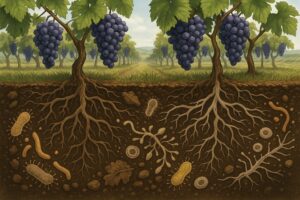
When we talk about the character of a wine, we often look up—toward the vines, the fruit, the sun, and the weather. But some of the most important work happens underground. A thriving world of microbes lives in healthy vineyard soils, and these tiny organisms play a surprisingly big role in shaping grape health and, ultimately, the complexity of the wine in your glass.
“Great wine starts long before the grapes appear—it begins in living, breathing soil.”
Healthy soils are full of bacteria and fungi that break down organic matter and turn it into nutrients the vines can actually use. This steady nutrient cycling helps vines grow with strength and balance, making them more resilient throughout the season. These same microbes also influence how soil holds and drains water. Good soil structure helps regulate the vine’s water access, and a little water stress at the right time can lead to smaller berries with deeper flavor and color — especially in reds.
Key ways soil life shapes wine:
Microbes convert organic material into nutrients that support vine strength.
Soil structure impacts water balance, which can influence the concentration and depth of grapes.
Microbial activity influences the formation of aroma precursors and flavor compounds.
Native yeasts and bacteria travel from the soil to the grape skins, influencing the fermentation process.
There’s also a growing body of research showing how the soil microbiome affects flavor development inside the fruit itself. Microbes influence the formation of aroma precursors and other natural compounds tied to fruit character. Even nitrogen levels, managed primarily by microbial activity, help shape the fresh, fruity notes often found in white wines and lighter reds.
“Soil health isn’t just farming—it’s flavor formation.”
And the connection doesn’t stop in the vineyard. Many of the yeasts and bacteria that live in the soil eventually find their way onto the grape skins. When those native microbes join the fermentation process, they can add extra layers of personality and texture, contributing to the wine’s sense of place. It’s one of the reasons regions with long, healthy farming traditions often produce wines with such distinct identities.
A quick note for anyone new to wine tasting: when you hear someone describe flavors like apple, vanilla, mint, or cherry, those aren’t ingredients being added. Those flavors come naturally from the grape variety, the growing environment, and the method of wine aging—whether in oak, steel, clay, or neutral barrels. The environment, both above and below ground, shapes the chemistry of the wine in ways that evoke familiar flavors.
Sustainable vineyard practices—such as reducing the use of harsh chemicals, encouraging organic matter, and adding compost—help keep these underground ecosystems thriving. The payoff is healthier vines, more expressive fruit, and wines that truly reflect where they’re grown. In the end, living soils don’t just support the vines; they help tell the story inside every bottle.