Blind tasting isn’t guessing — it’s detective work. By observing color, aroma, and structure, tasters use their senses to logically determine a wine’s grape variety, age, and origin. This process, known as deductive tasting, removes bias and helps you focus on what the wine is actually conveying.
Step 1: Look Before You Sip
Visual clues offer your first hints.
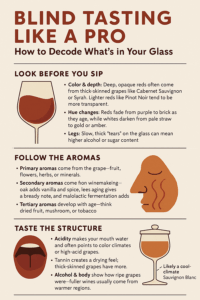
Color & depth: Deep, opaque reds often come from thick-skinned grapes, such as Cabernet Sauvignon or Syrah. Lighter reds, such as Pinot Noir, tend to be more transparent.
Hue changes: Reds fade from purple to brick as they age, while whites darken from pale straw to gold or amber.
Legs: Slow, thick “tears” on the glass can mean higher alcohol or sugar content.
Step 2: Follow the Aromas
What you smell tells the story of the grape, the climate, and the winemaking.
Primary aromas come from the grape, fruit, flowers, herbs, or minerals.
Secondary aromas originate from winemaking — oak contributes vanilla and spice, lees aging imparts a bready note, and malolactic fermentation adds creaminess.
Tertiary aromas develop with age — think dried fruit, mushroom, or tobacco.
Step 3: Taste the Structure
How a wine feels in your mouth is just as revealing.
Acidity makes your mouth water and often points to cooler climates or high-acid grapes.
Tannin creates a drying sensation; thick-skinned grapes tend to have more.
Alcohol & body show how ripe the grapes were — fuller wines usually come from warmer regions.
Finish: Longer finishes often signal higher quality.
Step 4: Connect the Dots
Use each clue as evidence rather than jumping to conclusions.
For example:
Pale color, citrus and green notes, high acidity — likely a cool-climate Sauvignon Blanc.
The more you taste and compare, the easier these connections become.
Practice Makes Perception
Blind tasting is like building a memory bank. Try flights of the same grape from different regions, or different vintages of the same wine. Over time, patterns appear — you’ll start to see how place, weather, and winemaking shape every glass.
At Willowcroft, we encourage guests to taste side by side and notice those differences — our ridge-grown wines often exhibit bright acidity, concentrated fruit, and subtle oak balance. When you taste thoughtfully, you’ll discover how every clue leads back to the vineyard itself.