
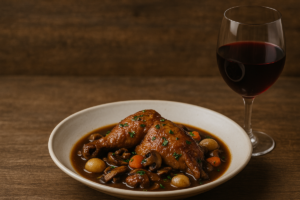
Cooking with wine does more than make a recipe sound fancy—it brings acidity, moisture, and richness to everyday dishes. A splash of the right wine can lift a sauce, tenderize meat, or turn a simple pan of veggies into something layered and memorable. And the most important rule? Use a wine you’d actually drink. If it isn’t pleasant in the glass, it won’t magically taste better in your pan.
White wines brighten poultry, seafood, and creamy dishes, while reds bring warmth and depth to heartier meals. When wine reduces, you get concentrated flavor—not raw alcohol—so adding it early is key.
How to Use Wine in Cooking
Here are some of the most common and useful ways wine works in the kitchen:
Deglazing: Add wine to a hot pan after searing to lift the browned bits (fond) and create a flavorful base for sauces.
Braising & Stewing: Use wine as the main cooking liquid for slow-cooked dishes like Beef Bourguignon or Coq au Vin.
Marinades: Wine’s natural acidity helps tenderize meat and add subtle layers of flavor.
Sauces & Soups: A splash of wine boosts gravies, cream sauces, pan sauces, and even tomato-based soups.
Poaching: Gently cook fruits, fish, or eggs in wine for a soft, aromatic finish.
Steaming: Add wine to the steaming liquid for mussels, clams, or vegetables.
Choosing Your Wine
The wine you pick shapes the character of the dish. A few simple guidelines can help:
Skip “cooking wine.” It contains salt and preservatives—use the real thing.
Red Wines: Choose dry, softer reds like Merlot or similar styles for richer meats, stews, and braises.
White Wines: Go for dry, crisp whites (Pinot Grigio, Sauvignon Blanc) for chicken, fish, and lighter sauces.
Fortified Wines: Marsala, Port, and Sherry bring a deeper, slightly sweet complexity to both savory and sweet dishes.
Tips for Best Results
A few small adjustments make a big difference:
Add wine early so it has time to reduce and concentrate.
Match the wine style to the dish—light wines for delicate flavors, bolder wines for bigger, richer meals.
Use non-reactive pans like stainless steel or enameled cast iron to avoid metallic flavors.
Cooking with wine is approachable once you get the hang of it. Whether you’re lifting a simple pan sauce or slow-cooking something cozy for a winter evening, wine brings a little magic to the pot—no matter how you use it.